What a Facebook page does well (keep it)
Let's be fair to the page first. The Philippines is one of the most Facebook-heavy countries on earth — 90.8 million people used it in early 2025, 78% of the population, according to DataReportal's Digital 2025 Philippines report — and for a financial advisor it is genuinely the best place to be seen, be recommended, and be messaged. It is free, it is where your warm market already scrolls, and Messenger is where most first conversations start.
A page also does three jobs a website never will: it puts your face in front of people who were not looking for an advisor, it lets a client recommend you with one tag, and it gives strangers a fast way to see that you are a real, active, licensed person. Keep posting there. Nothing below says stop.
Four things a Facebook page can't do — and a financial advisor website in the Philippines can
The problem starts the moment someone decides they might want to talk to you.
1. Take a booking. On a page, "let's set a time" is a Messenger thread — four messages of "kelan ka free?", a screenshot of your calendar, a reminder you have to remember to send. A website has a booking link with your real availability from Google Calendar; the lead picks a slot, gets the confirmation and the invite, and the reminder goes out on its own.
2. Run a quiz. The most effective thing you can hand a stranger is not a brochure; it is their own number. A two-minute Protection Check that shows a person their protection gap in pesos, then emails them a snapshot, converts curiosity into a booked call. A page can link to it, but it cannot host it.
3. Be found by name. Someone your client mentioned you to will Google your name before they message you. A Facebook page is barely indexed and shows a login wall to half the people who land on it. A website with your name, your agency, your city and your photo is what ranks — and it is the first thing that makes a referral feel safe.
4. Belong to you. Pages get restricted, renamed, reach-throttled and, occasionally, deleted — and the appeal goes to nobody. A website on your own domain moves with you when you change agencies, change companies, or change your mind about Facebook.
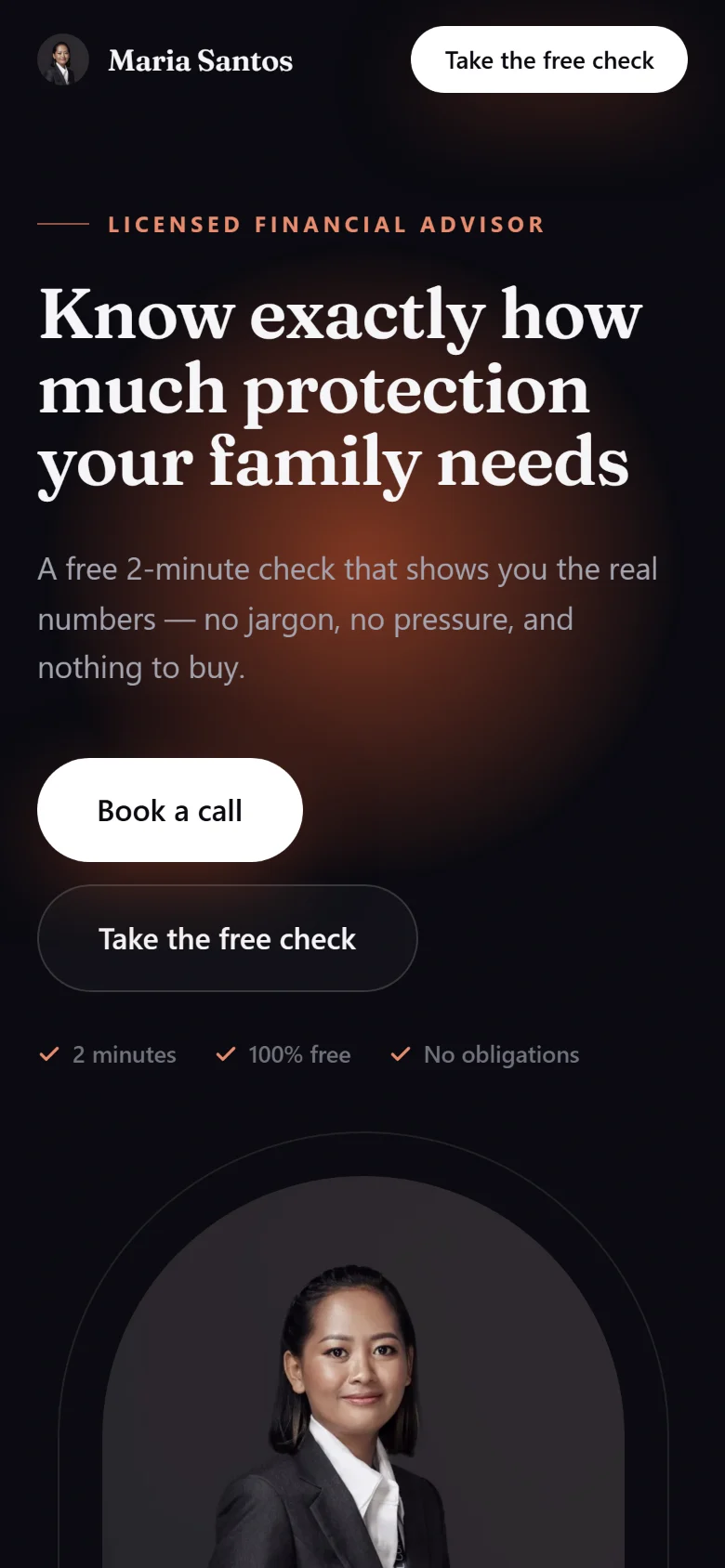
If that list is the reason you have been meaning to "get a website someday", the someday part is what changed: a financial advisor website you can launch tonight now costs less than a month of load, and takes about fifteen minutes — photo, a few lines about who you help, a template, publish.
Own domain, own data: why it matters more each year
Two quieter reasons that get bigger the longer you stay in the business.
The domain. A ₱600-a-year .com or .ph domain with your name on it is the cheapest professional asset you will ever buy. It goes on your calling card, in your email signature, on the QR code at your booth — and it never changes, no matter which platform is fashionable in 2029. Point it at your site now; the site can change underneath it later.
The data. Every lead who takes your quiz, every booking, every follow-up lives somewhere. If that somewhere is a Messenger inbox, it belongs to Facebook and it is searchable only by scrolling. If it is your website's own lead list, it is yours — exportable, sortable, and covered by the Data Privacy Act as your client book, with you as the controller. That distinction matters the day you move agencies.
What your website needs (and what it doesn't)
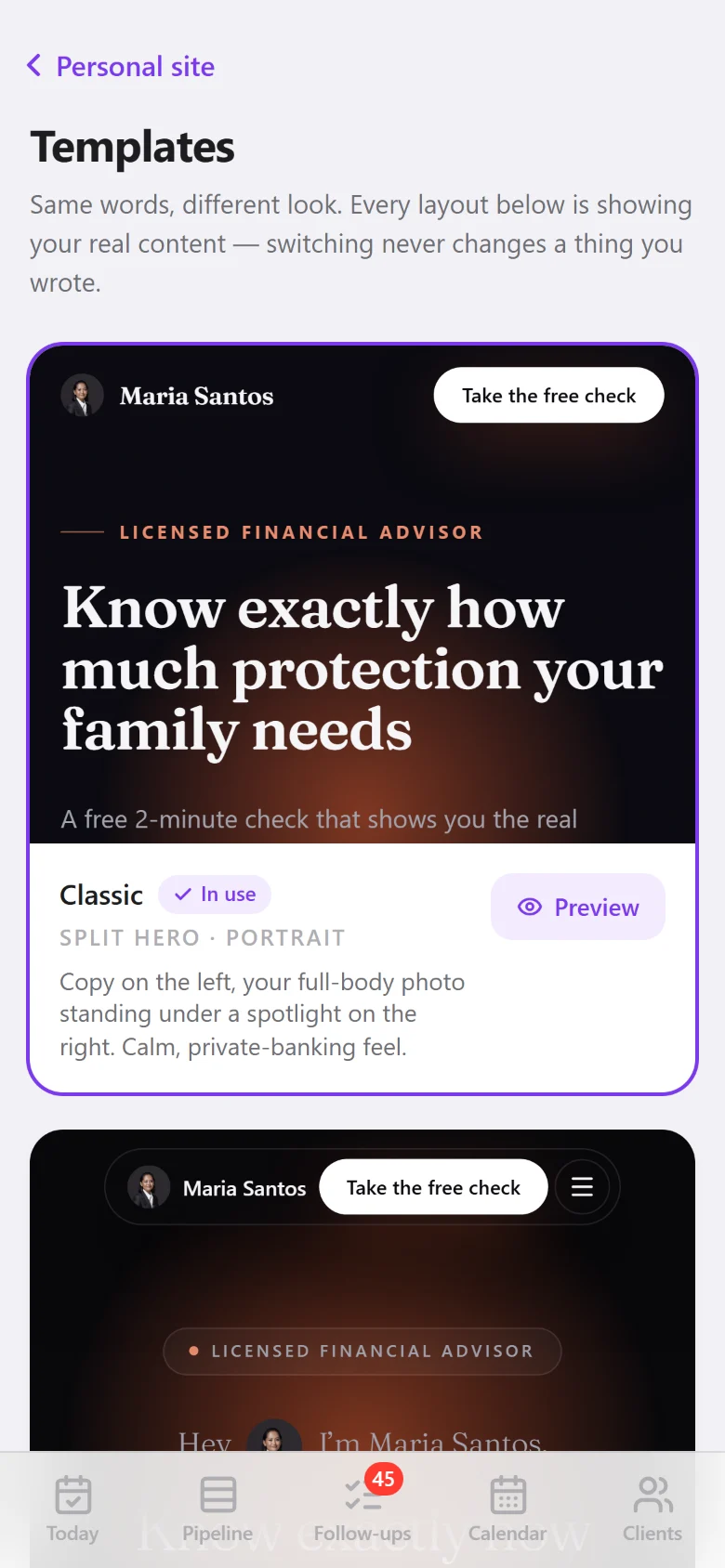
Advisors overbuild. The site that converts is one page, and it has exactly these things in this order:
| Section | Why it's there |
|---|---|
| Your photo, your name, your agency, your city | The referral check: "is this the person Grace mentioned?" |
| One sentence about who you help | "Protection that fits the life you actually have" beats a list of products |
| The Protection Check | The quiz — the reason a stranger stays longer than eight seconds |
| A booking button | Real availability, confirmation, reminder — no Messenger back-and-forth |
| Three short client stories (with permission) | Trust, in their words, not yours |
| A licence line and a way to reach you | The Insurance Commission number; Messenger and email |
What it does not need: a blog (yet), a "services" page per product, a chatbot, stock photos of handshakes, or anything that takes more than an evening. If it is not on the list above, it is delaying your launch.
When a Facebook page really is enough
Honest answer: for your first month, while you are building the warm-market list and having your first Clarity Calls, a page plus a good booking link is enough. The website's job is to catch people who look you up — and nobody looks you up until a few clients have started mentioning you.
So the order is: list first, calls second, website the week your first referral asks "do you have a website?" That week comes sooner than most advisors expect, and building the site then takes less time than the Messenger thread it replaces.
FAQ
How much does a financial advisor website cost in the Philippines?
Anywhere from free (a page builder with someone else's branding) to ₱20,000–35,000 for an agency-built funnel. A NudgeNow site, with the quiz and the booking link included, is ₱299 a month after a free 30-day trial; a domain is about ₱600 a year on top, if you want one.
Can I use my company's official advisor page instead?
Use it as well, not instead. Carrier-provided pages carry the carrier's branding, cannot take a real booking from your own calendar, and stay behind when you move. Your own site links to your company page; the reverse is not true.
Do I need to know how to build a website?
No. If you can fill in a form and upload a photo, you can publish a one-page advisor site in about fifteen minutes. The templates handle the design; you handle the two sentences about who you help.